
Home » Pain After Wisdom Tooth Extraction: Emergency Care in Cheadle
Some soreness after a wisdom tooth comes out is normal. It usually peaks around day two or three, then eases. If your pain is getting worse after day three, spreads towards your ear, or comes with a bad taste, it may be dry socket or an infection.
Both are very treatable, and most patients feel relief within hours of treatment. We see patients within 24 hours, even if your tooth was removed somewhere else.
Call Us: 07789 696472

Typically responded to within 24 hours
Had a wisdom tooth out and the pain is not settling? Tell us when it was removed and how you feel. We will call you back with an emergency slot.
Normal healing gets a little better each day after the third day. These signs suggest something is getting in the way.
Pain that eases and then returns stronger, often reaching your ear or temple, is the classic sign of dry socket.
Swelling normally peaks by day three. Swelling that is still increasing after that can mean infection.
A temperature, chills or feeling generally unwell after an extraction should be checked the same day.
An unpleasant taste or smell from the socket that brushing and rinsing do not shift can be a sign of dry socket or infection.
If you can see whitish bone, or the dark clot seems to have gone, the socket may not be healing as it should.
If regular pain relief barely touches the pain, do not keep increasing the dose. Get the socket looked at.
For most people, day two or three is the worst. Swelling and stiffness are at their peak while the body starts healing. From there, each day should feel a little easier. Knowing the normal pattern makes it easier to spot when something has gone off track.
Numbness wears off and soreness begins. Some oozing and mild swelling.
Swelling, jaw stiffness and soreness at their worst. Bruising may appear.
Pain and swelling ease noticeably. Most people are back to normal routines.
The gum closes over and stiffness keeps improving while the bone heals underneath.
| Normal healing | Possible dry socket | Possible infection | |
|---|---|---|---|
| When pain peaks | Days 2 to 3, then eases | Starts or worsens 2 to 5 days after | Builds from day 3 to 7 |
| Type of pain | Dull ache, controlled by painkillers | Intense, throbbing, often reaching the ear | Throbbing with growing tenderness |
| Swelling | Peaks by day 3, then goes down | Little or none | Increasing after day 3 |
| Taste or smell | Mild, clears with rinsing | Unpleasant, persistent | Unpleasant, sometimes with pus |
| Socket appearance | Dark clot, then pink gum | Empty, may show whitish bone | Red, swollen, may discharge |
| Temperature | Normal | Normal | May be raised |
| What to do | Keep following aftercare | Book an urgent appointment | Book an urgent appointment |
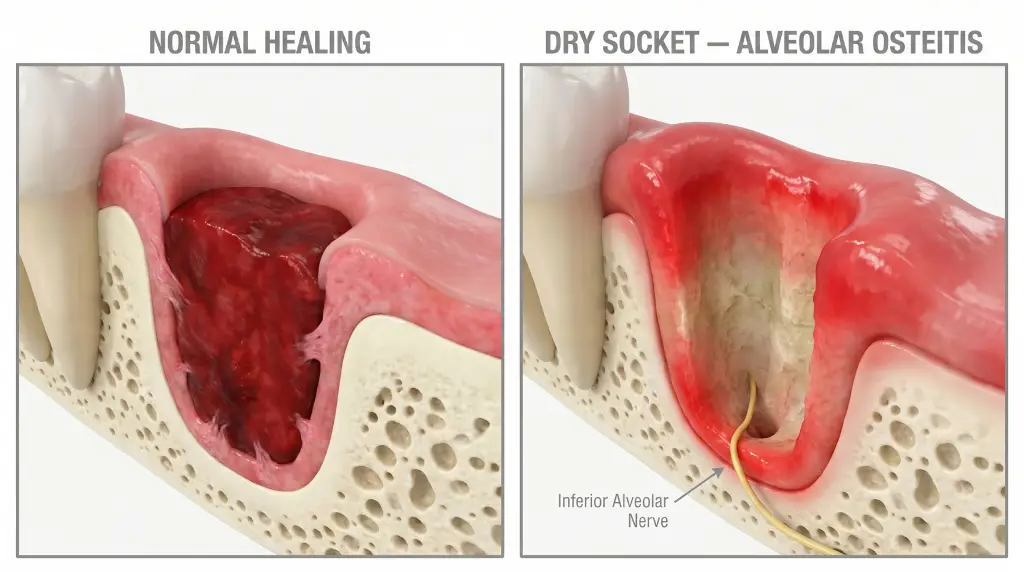
After a tooth is removed, a blood clot forms in the socket. It protects the bone and nerves underneath while the gum heals. If that clot breaks down or is dislodged too early, the bone is left exposed and becomes inflamed. That is dry socket.
It is more common after lower wisdom teeth and in people who smoke. It is not an infection, so antibiotics are not usually needed. What helps is cleaning and dressing the socket.
Most patients leave noticeably more comfortable than when they arrived.
When and where the tooth was removed, and how the pain has changed. Extraction notes help but are not essential.
We check the clot, gum, neighbouring teeth, swelling and how far you can open.
To check for a retained root fragment, damage to the next tooth or infection in the bone.
Rinse and dress a dry socket, clean and drain an infection, or remove a sharp fragment.
Dressings are sometimes changed after two to three days. We book any review you need.

Appointments from 35 pounds · Extraction done elsewhere? We still see you · No registration needed
Call Us: 07789 696472
Paracetamol or ibuprofen regularly at the dose on the packet, rather than waiting for the pain to peak. Follow any advice your dentist gave you.
A wrapped ice pack for 15 minutes at a time in the first two days. Gentle warmth after 48 hours eases a stiff jaw.
From the day after your extraction, especially after meals. Let the water fall out rather than spitting hard.
Avoid smoking, vaping, straws and vigorous rinsing. Each one can dislodge the clot.
Soup, yoghurt, eggs and mashed potato, chewing on the other side.
Emergency signs: swelling spreading to your neck, difficulty swallowing or breathing, or heavy bleeding that will not stop. Call 999 or go to A&E.
Following these steps lowers your risk of dry socket and helps the socket heal cleanly.
We are based on Cheadle High Street and see patients with pain after extractions from across south Manchester and Cheshire, usually the same or next day.
Not sure if we cover your area? Call us on +4407789 696472 — if we can help, we will.

BDS [university, year] · GDC no. [number]
[Years in practice and experience with emergency extractions and infection management.]
Last reviewed: [month year]
I had a painful dental abscess and was seen promptly for an emergency consultation. Doctor was very helpful and diagnosed my problem within minutes. The abscess was drained and treated with precision, and I was prescribed antibiotics along with clear aftercare instructions. The entire procedure was handled with minimal discomfort, and the infection cleared up steadily over the following days. The entire experience from the appointment to post treatment , follow-up was professional and stress-free. Highly recommend this clinic!
I recently had a sudden, severe toothache and reached out to them for an emergency appointment. They were incredibly accommodating and got me in quickly, which I really appreciate.On examination, the doctors diagnosed a cracked tooth and carefully restored the tooth. The entire process was smooth, painless, and handled with great precision. Thank you everyone.
Super happy with the way this practice handled my emergency, I was in a lot of pain and for fair prices and really really smooth treatment – I really can’t fault the way they dealt with me!
The questions we are asked most often about recovery, dry socket and pain after wisdom tooth removal.
For most people it is day two or three. That is when swelling, stiffness and soreness peak. From day four, things should improve a little each day.
Most of the pain settles within a week. Some tenderness and jaw stiffness can last up to two weeks, especially after a lower wisdom tooth. Pain that gets worse rather than better is not normal.
The main sign is pain that eases at first and then returns stronger, usually two to five days after the extraction. It is often throbbing and spreads to your ear. You may notice a bad taste or smell, or an empty-looking socket.
It does heal eventually, but it can take a week or more and is very painful in the meantime. Having the socket cleaned and dressed usually brings relief within hours.
Usually not. Dry socket is inflammation of exposed bone, not an infection, so UK guidance does not recommend routine antibiotics. Cleaning the socket and placing a soothing dressing is what helps.
In the first few days you should see a dark red clot in the socket. Over the following week it becomes whitish-yellow as new gum tissue forms, then pink. An empty hole with visible bone is not normal.
Yes. Swelling usually peaks around day two or three, then goes down. Swelling that keeps growing after that, or spreads to your neck, needs checking.
Lower wisdom teeth share nerve pathways with the ear, so pain can feel as though it is coming from the ear. Ear pain that starts or worsens a few days after the extraction is a common sign of dry socket.
Signs include swelling and pain that increase after day three, pus or discharge, a bad taste, and a raised temperature. Infection needs prompt treatment.
The risk is highest in the first five days. By the end of the first week, the socket is usually well protected by new tissue.
It is best not to. Smoking is one of the biggest risk factors for dry socket. Try to avoid it for at least 72 hours, and ideally a week.
Yes, especially after a lower wisdom tooth. It usually improves within a week or two. Gently opening and closing your mouth helps. Stiffness that is getting worse should be checked.
Yes. We regularly see patients whose extraction was done at another practice, in hospital or abroad. You do not need to be registered with us.
Sometimes a small root fragment or bone spicule works its way up through the gum and feels sharp. We can check it with an X-ray and remove or smooth it if needed.
Go to A&E or call 999 if swelling spreads under your jaw or down your neck, if you have difficulty breathing or swallowing, or if bleeding will not stop after 30 minutes of firm pressure.
Emergency appointments start from 35 pounds. We confirm the cost of any treatment before we begin. See our price list.
If your recovery is going backwards, we can usually see you within 24 hours, find the cause and ease the pain, often in a single visit. We see patients wherever their tooth was removed, from Cheadle, Gatley, Heald Green, Handforth, Didsbury, Stockport, Wilmslow and Sale.
Call Us: 07789 696472
Appointments from 35 pounds · New patients welcome · 7 days a week · Booking only, no walk-ins
Related: Wisdom tooth removal · Oral infections · Swollen gums · Infected tooth extraction · Worst day after wisdom tooth extraction