
Home » Tooth Pain When Brushing: Treatment in Cheadle
Brushing keeps your mouth healthy and can clear trapped food, but it cannot repair decay, seal an exposed root, heal a crack or drain an infection.
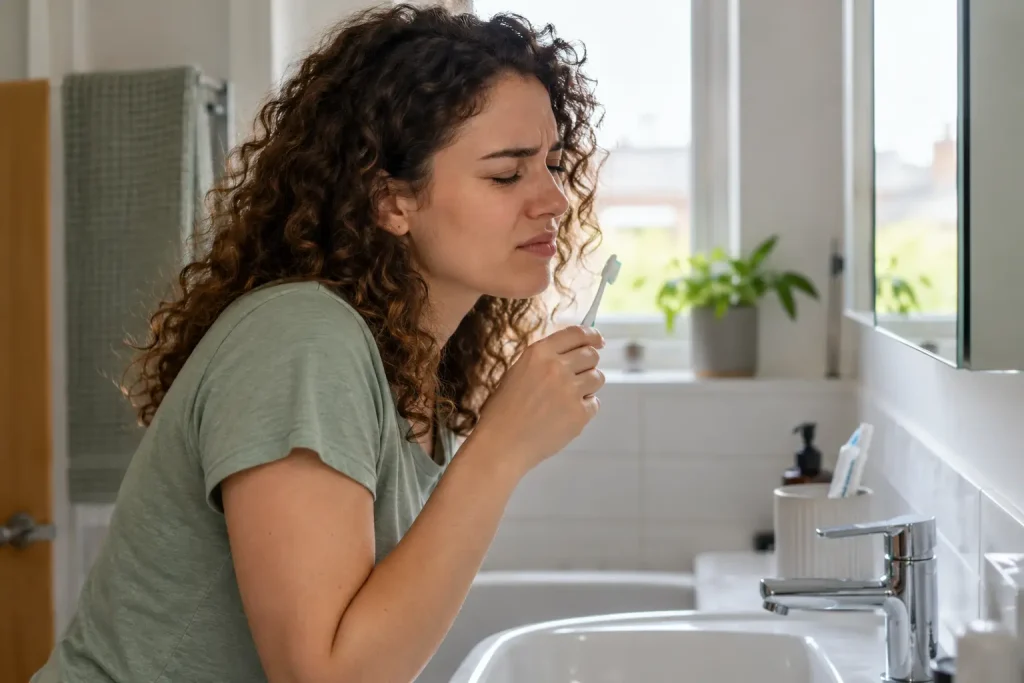
If your tooth or gum hurts every time you brush, or the ache is still there afterwards, something needs treating. Our Cheadle emergency team can see you within 24 hours to find the cause and fix it, so brushing feels normal again.
Call Us: 07789 696472
Typically responded to within 24 hours
Does your tooth or gum hurt when you brush? Tell us what you feel and we will call you back with an appointment.
A brief twinge now and then is common. These signs mean the problem is unlikely to go away with brushing alone.
Swelling around a tooth that hurts to brush can mean an abscess. Brushing will not drain it, and it needs prompt treatment.
If the ache carries on for minutes after you put the brush down, the nerve inside the tooth may be inflamed.
Pain in the same place on every brush often points to a cavity, a cracked tooth or a lost filling.
A sharp zing from cold water or cold air, often near the gumline, is usually exposed dentine or a receding gum.
Tender, bleeding gums when you brush are a common early sign of gum disease. It can be reversed if treated early.
If careful brushing and painkillers have not settled it within a day or two, it is time to be seen.
Signs of infection: swelling that is spreading, a fever, a foul taste or difficulty opening your mouth can be signs of infection. Call us straight away. If swelling reaches your eye or neck, or you have trouble swallowing or breathing, call 999 or go to A&E.
Brushing helps in one situation: when food or plaque is trapped against the tooth or gum. Gently clearing it can ease the pressure within hours. For almost every other cause of toothache, brushing only keeps the area clean while the real problem carries on underneath.
If brushing makes the pain worse, that is useful information too. It tells us roughly where the problem is and what is likely to be causing it.
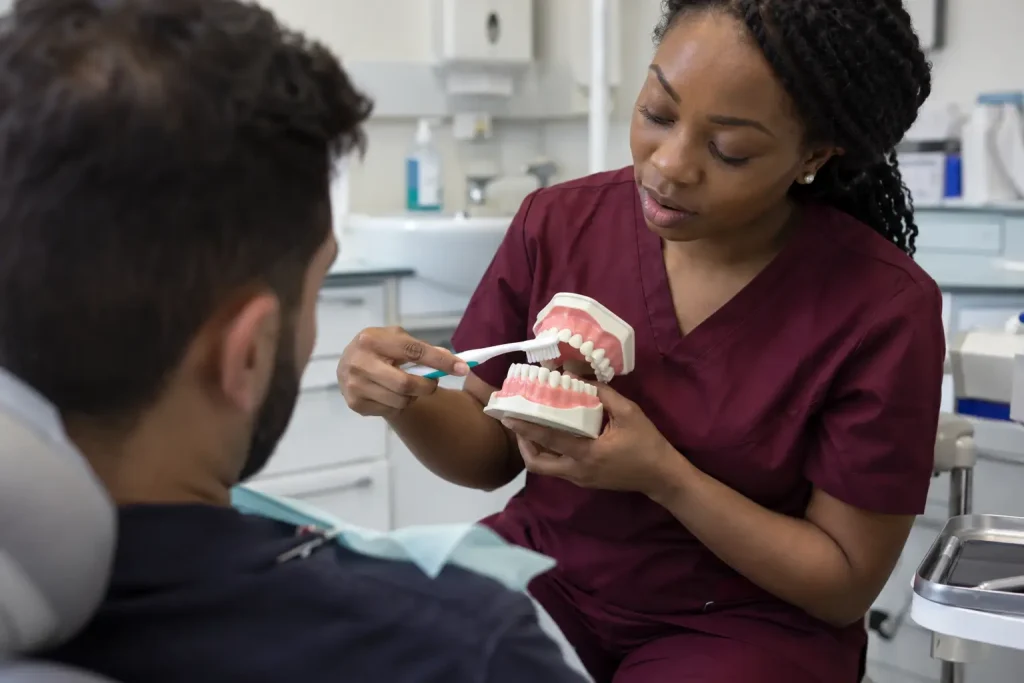
Yes. Scrubbing with a hard brush can wear the gum back and the enamel away at the neck of the tooth. That exposes sensitive dentine, so the very thing meant to help starts causing pain. We will check for wear and show you a gentler technique.
| What you feel when brushing | Likely cause | Will brushing fix it? | How we treat it |
|---|---|---|---|
| Quick, sharp zing near the gumline, worse with cold | Sensitive teeth from exposed dentine or gum recession | No, but sensitive toothpaste helps | Fluoride varnish, desensitising treatment, or bonding over exposed roots |
| Sore, bleeding gums | Gum inflammation or gum disease | Partly, with better technique | Hygienist clean and a home care plan |
| Pressure that eases once food is cleared | Trapped food between teeth | Yes, often | A check for a gap or broken filling that keeps trapping food |
| Sharp pain in one tooth every time | Cavity, lost filling or cracked tooth | No | Filling, crown or bonding |
| Lingering ache after brushing | Inflamed nerve (pulpitis) | No | Filling or root canal treatment |
| Tender swollen gum, bad taste | Abscess | No, and brushing hard can hurt more | Drainage and treating the tooth, with antibiotics only if spreading |
We find out exactly why brushing hurts, then treat the cause so you can clean your teeth comfortably again
We ask where it hurts, what sets it off and how long it lasts.
We check for decay, cracks, worn areas near the gumline, receding gums and signs of gum disease.
This shows decay between teeth, problems under old fillings and any infection at the root.
A desensitising treatment, fluoride varnish, filling, abscess drainage or the first stage of root canal treatment.
The right brush, toothpaste and technique to protect your gums, plus any follow-up booked.
Appointments from 35 pounds · New patients welcome · No registration needed
Call Us: 07789 696472
Keep brushing. Stopping lets plaque build up and makes most problems worse. Just do it more gently.
A soft or extra-soft brush cleans just as well with far less pressure on sore areas.
Cold water from the tap can set off sensitive teeth. Run it slightly warm.
Smear a little over the sore area at night and leave it on rather than rinsing it off.
Half a teaspoon of salt in warm water soothes sore gums and helps clear food.
Paracetamol or ibuprofen at the dose on the packet, unless you have been told not to.
Do not delay: brushing will not help swelling, a fever or a foul taste. These can be signs of infection, so call us straight away, or go to A&E if we are closed and the swelling is spreading.
Once the cause has been treated, these habits help keep pain from coming back.
We are based on Cheadle High Street and see patients from across south Manchester and Cheshire, usually the same or next day.
Not sure if we cover your area? Call us on +4407789 696472 — if we can help, we will.
We pinpoint whether your pain comes from sensitivity, gums, decay, a crack or infection.
We show you how to brush comfortably and recommend products that suit your teeth. We do not just hand you a leaflet.
Desensitising treatments, fillings and abscess drainage can usually be done at your first visit.
We can treat gum problems as well as teeth, all under one roof.
Emergency appointments start from 35 pounds and every treatment is quoted before we begin.
Part of Cheadle Dental Practice. All our dentists are registered with the General Dental Council.
BDS [university, year] · GDC no. [number]
[Years in practice and experience with emergency extractions and infection management.]
Last reviewed: [month year]
I had a painful dental abscess and was seen promptly for an emergency consultation. Doctor was very helpful and diagnosed my problem within minutes. The abscess was drained and treated with precision, and I was prescribed antibiotics along with clear aftercare instructions. The entire procedure was handled with minimal discomfort, and the infection cleared up steadily over the following days. The entire experience from the appointment to post treatment , follow-up was professional and stress-free. Highly recommend this clinic!
I recently had a sudden, severe toothache and reached out to them for an emergency appointment. They were incredibly accommodating and got me in quickly, which I really appreciate.On examination, the doctors diagnosed a cracked tooth and carefully restored the tooth. The entire process was smooth, painless, and handled with great precision. Thank you everyone.
Super happy with the way this practice handled my emergency, I was in a lot of pain and for fair prices and really really smooth treatment – I really can’t fault the way they dealt with me!
The questions we are asked most often about brushing, sensitive teeth and toothache.
Only when the pain comes from trapped food or plaque. Gently brushing it away can ease the pressure. For decay, cracks, nerve problems or infection, brushing keeps the area clean but cannot fix the cause.
Brushing removes surface stains from tea, coffee, red wine and smoking, so teeth can look brighter. It cannot change the natural colour of your teeth. For a noticeably whiter shade, professional whitening is the safe option.
Yes, from the surfaces the brush reaches. It cannot reach between teeth, so you also need to clean between them daily. Once plaque hardens into tartar, brushing cannot shift it and you need a hygienist clean. Plaque left behind is a common cause of sore gums when brushing.
No. Brushing more often will not lighten your teeth, and brushing too often or too hard can wear enamel. Thinner enamel lets more of the yellower dentine underneath show through and can make teeth sensitive. Twice a day is enough.
Two minutes is long enough to clear surface stains. Brushing for much longer, especially with pressure, does not whiten further. It can wear enamel and push your gums back, which causes sensitivity.
No. Once surface stains are gone, extra brushing does not whiten. Brushing many times a day can wear enamel, especially straight after acidic food or drink, and leave teeth looking more yellow and feeling sensitive.
Not beyond twice a day. If your teeth still look stained or yellow with a good routine, a scale and polish or professional whitening will make a visible difference without risking your enamel.
The most common reason is sensitivity from exposed dentine or receding gums. Other causes include a cavity, a cracked tooth, a lost filling, gum disease or an abscess. If it hurts in the same spot every time, have it checked.
No. Stopping lets plaque build up and usually makes things worse. Switch to a soft brush and lukewarm water, and brush gently around the sore area until you can be seen.
Sore or bleeding gums are usually a sign of gum inflammation caused by plaque. Brushing too hard can also bruise them. Gentle, thorough cleaning and a hygienist visit usually settle it. Bleeding that lasts more than a week should be checked.
Yes. Hard scrubbing can wear the gums back and the enamel away near the gumline, exposing sensitive dentine. A soft brush and gentle circles protect your teeth and still clean them well.
For sensitivity, yes. It builds up over a few weeks of twice-daily use. It will not help decay, cracks or infection, so if it has not helped within a month, see a dentist.
A quick twinge that fades in seconds is common with sensitive teeth. Pain that lingers, throbs or keeps you awake is not normal and usually means the nerve is involved.
Brushing will not cause an abscess to spread, but scrubbing a swollen area can be very painful. Brush gently around it, rinse with warm salt water, and book an urgent appointment, as an abscess needs treatment to drain.
Cold triggers pain in teeth with exposed dentine, worn enamel, decay or an inflamed nerve. Using lukewarm water helps in the short term, but the cause still needs treating.
Yes, gently. Avoid pressing hard on the cracked tooth and avoid chewing on that side. A crack needs assessing quickly before it spreads.
Yes. Tender, red or bleeding gums are early signs of gum disease. Caught early, it can be reversed with professional cleaning and better home care.
An alcohol-free mouthwash can help keep the area clean and freshen your breath. Like brushing, it does not treat the cause of the pain.
If pain lasts more than a day or two, keeps coming back, or comes with swelling or a fever, book an appointment. Swelling or a fever should be seen the same day.
We can apply a fluoride varnish or desensitising treatment. We can also seal exposed roots with a tooth-coloured filling and treat any decay or gum problems underneath. Most patients notice a difference quickly.
Emergency appointments start from 35 pounds. We quote any treatment before we begin. See our price list.
If your tooth or gums hurt when you brush, a quick check usually finds the cause. Most problems are simple to treat when caught early. We can usually see you within 24 hours. We welcome patients from Cheadle, Gatley, Heald Green, Handforth, Didsbury, Stockport, Wilmslow and Sale.
Call Us: 07789 696472
Appointments from 35 pounds · New patients welcome · 7 days a week · Booking only, no walk-ins
Related: Toothache · Swollen gums · Infected gums · Hygienist · Does brushing your teeth help toothache?