
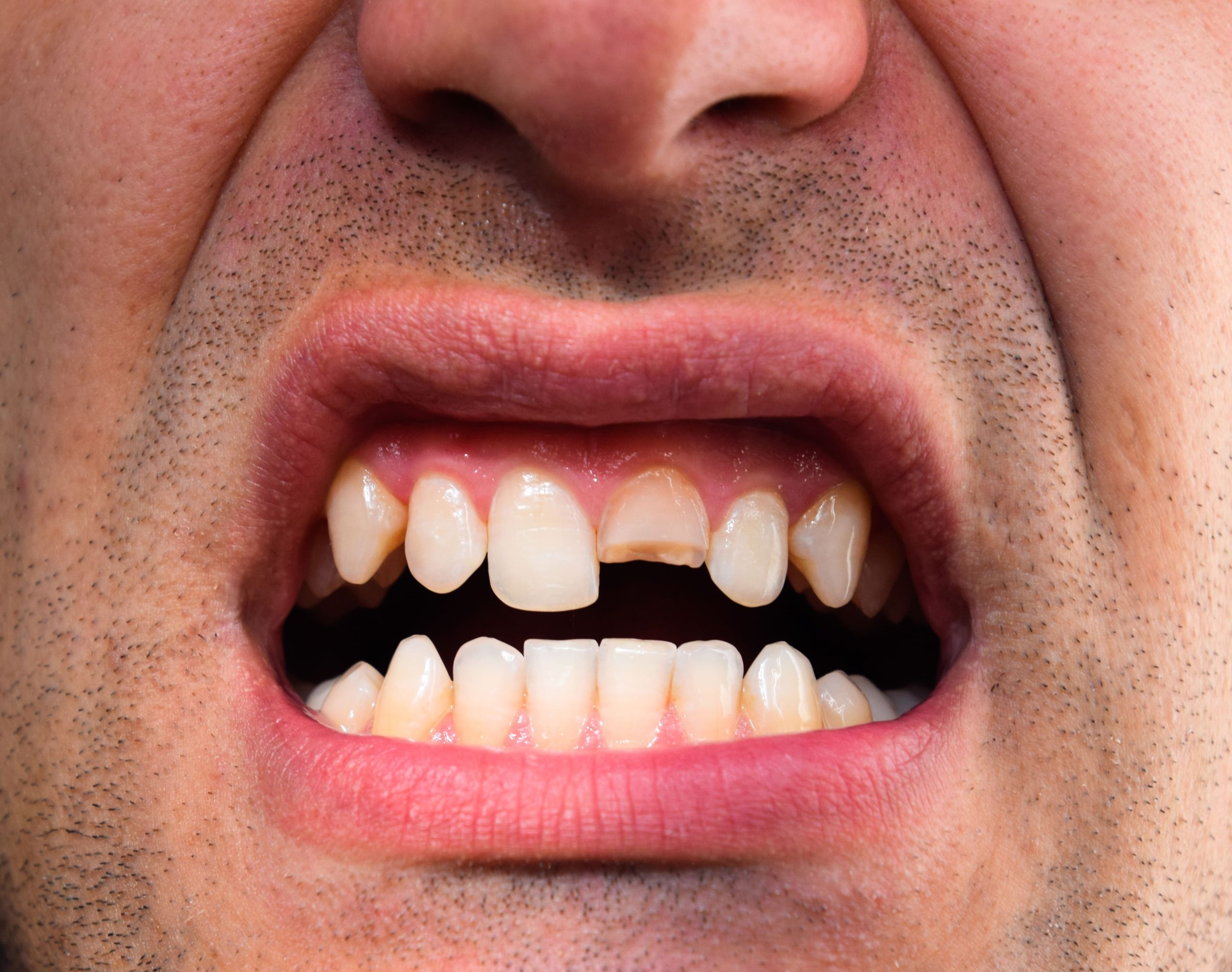
A chipped tooth leaves you caught between worry and hope, and wondering: do chipped teeth grow back, or does this need a dentist? The damage often looks minor, and the tooth may not hurt, so waiting to see whether it settles feels sensible.
That hope has logic behind it, since the body mends so much on its own, from a broken bone to a deep cut. Enamel works by different rules, though, and knowing those rules makes the case for proper chipped tooth repair far clearer.
The sections below answer the question “do chipped teeth grow back?”, then cover what a chip does to a tooth, when it turns urgent, and how dentists put it right.
What Happens Inside a Tooth When It Chips
Every tooth is built in layers. Enamel forms the hard outer shell, dentine sits beneath it as a softer yellow layer, and the pulp rests at the centre with the nerve and blood supply.
How much a chip matters depends on how deep it goes. Shallow damage stays within the enamel and often causes no discomfort, while deeper breaks reach the dentine, which is threaded with tiny tubules leading to the nerve.
That is the point where cold air and sweet foods start to sting. If the fracture exposes the pulp you know quickly, because the pain is sharp and refuses to fade.
So, Do Chipped Teeth Grow Back on Their Own?
No, the missing piece cannot regrow, and nothing you do at home will change that.
Enamel is built by cells called ameloblasts, and they finish their work before the tooth pushes through the gum. By the time you can see it, those cells have gone, leaving your body no way to lay down fresh enamel.
One smaller repair process does exist, since saliva and fluoride toothpaste push minerals back into softened enamel. That works only at a microscopic level, though, so it strengthens what is left rather than rebuilding a lost corner. The pulp may also lay down a defensive layer of tertiary dentine deeper inside, but that happens out of sight and never restores the shape of the tooth.
Why a Chip Can Seem to Improve on Its Own
Rough edges often feel less jagged after a few weeks, which keeps the myth alive and leaves many people asking, do chipped teeth grow back after all? Chewing wears the sharp points down until your tongue stops catching on them, and sensitivity settles once the nerve calms. None of that counts as healing, though, because the same weak spot is still sitting there and the exposed dentine carries on gathering plaque.
What Happens When a Chipped Tooth Is Left Alone
Small chips rarely stay small, and problems tend to build up when the damage goes unchecked:
- Decay at the broken edge: exposed dentine is softer than enamel, so bacteria find a direct route inside.
- Ongoing sensitivity: hot, cold and sugary foods set off bursts of pain that usually get worse.
- Cracks that travel: a weakened tooth flexes under bite force, which can turn a chip into a fracture.
- Soft tissue irritation: sharp enamel rubs the tongue and cheek, leaving sore patches or ulcers.
- Pulp infection: once bacteria reach the nerve, pulpitis and a dental abscess can follow.
Decay is the risk most people underestimate, because it starts quietly at the chipped edge and gives little warning until it reaches the nerve. A tooth decay dentist will check the site closely and may take a radiograph, since damage below the surface is easy to miss.
Signs the Damage Needs Prompt Attention
Not every chip is an emergency, and a tiny painless flake off a front tooth can usually wait for a routine visit. Other signs point to something deeper:
- Pain that persists or throbs: lasting discomfort suggests the break has reached dentine or pulp.
- A pink or red centre: visible soft tissue in the middle of the tooth means the pulp is exposed.
- Bleeding that will not settle: gentle pressure should stop it, and anything more needs checking.
- Swelling in the gum or face: this often signals infection spreading beyond the tooth.
- A loose tooth: movement after a knock suggests the root or supporting bone is involved.
Heavy bleeding, a suspected broken jaw or a knocked-out adult tooth all need urgent care.
What to Do Before You Reach the Dental Chair
Sensible first aid protects the tooth while you arrange an appointment. Start with a gentle rinse of warm salt water, half a teaspoon in a glass, and spit it out. Children should use plain water instead. Look for any fragments and keep them in milk or saliva, because a dentist can sometimes bond the piece back on.
Dental wax or a piece of sugar-free chewing gum will cover a sharp edge and stop it catching. Chew on the opposite side, keep to softer foods, and hold a cold compress to the cheek if swelling appears. Paracetamol or ibuprofen taken as directed on the packet will ease the discomfort, though an aspirin tablet should never rest against the gum, since it burns the tissue.
How Dentists Restore a Chipped Tooth
Chipped tooth repair covers a range of treatments. The right one depends on how much structure has gone, whether the nerve is involved, and how the tooth handles your bite.
| Extent of damage | Usual treatment | What it involves |
|---|---|---|
| Tiny enamel chip, no sensitivity | Smoothing and recontouring | The edge is polished until it feels comfortable |
| Small chip on a visible tooth | Composite bonding | Resin matched to your shade is shaped on and set with a light |
| Larger chip affecting appearance | Veneer | A thin porcelain or composite shell covers the front |
| Significant loss of tooth structure | Crown | The tooth is prepared and capped to restore strength |
| Exposed or infected pulp | Root canal treatment, then a crown | The nerve is removed, the canal sealed, and the tooth capped |
| Break extending below the gum | Extraction and replacement | The tooth is removed, then a bridge or implant considered |
Many repairs are finished in a single appointment, bonding in particular. A good dentist judges each tooth on its merits rather than applying the same fix to every chip.
Keeping Your Teeth Out of Harm’s Way
Most chips trace back to habits rather than accidents. Ice cubes, olive stones, popcorn kernels and boiled sweets account for plenty of broken enamel.
Grinding at night loads the biting surfaces, so a night guard takes that pressure off. Anyone playing rugby, hockey or contact sport should wear a fitted mouthguard. Acidic drinks soften enamel for a while, so waiting before you brush after juice protects the surface. Teeth also make poor tools, and regular examinations pick up worn fillings and early decay before either becomes a break.
Protecting the tooth starts with the right assessment
So, do chipped teeth grow back? No. A chipped tooth will not mend itself, however small it looks, and however long you leave it. What begins as a cosmetic annoyance often turns into sensitivity, decay or a fracture needing far more work, so having it looked at early keeps the treatment simple.
If a chip is bothering you, or you are unsure how deep it goes, booking an assessment is the quickest way to find out. A dentist can examine the damage, ease any discomfort and talk you through the chipped tooth repair options that suit your tooth.